
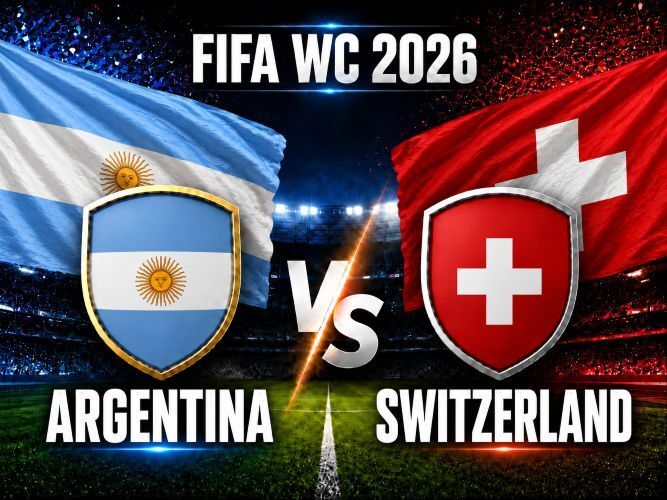
How Argentina approaches the match
I see an Argentina side with five wins in five tournament matches, 14 goals scored and 5 conceded, but the last two games also left a warning light on. The attack remains elite. Messi still dictates the rhythm, Enzo Fernandez and Mac Allister give structure and timing, and Alvarez, Lautaro or Jose Manuel Lopez offer different ways to attack the box. Against Egypt, Argentina produced 2.8 xG from 19 shots, which tells me the comeback was not pure chaos, it was pressure with real substance.
The concern is the other side of the ball. Cape Verde and Egypt both scored twice, and the pattern is similar. When Argentina lose defensive balance, especially behind the full-backs, transitions can hurt them. There are no confirmed major absences, which matters in a quarter-final after two draining matches. I expect Scaloni to lean into control, longer spells of possession, patient circulation and set-pieces, because giving Switzerland a low-block lead would be exactly the script Argentina want to avoid.
How Switzerland approaches the match
Switzerland have earned this quarter-final with discipline. Nine goals scored and only three conceded across five matches is a strong profile, but the Colombia match showed the limits of their attack in a low-event game. Colombia created the better chances and outshot them, while Switzerland relied on compact defending and Gregor Kobel, who now becomes one of the key names in this tie.
Xhaka is still the strategic centre, Embolo is the outlet, and Akanji with Elvedi give authority in the box. The big issue is Johan Manzambi, who missed Colombia with a knee problem and has no clear return timeline. If he cannot start, Switzerland lose some carrying power and a source of goals between the lines. Murat Yakin is pragmatic by nature, and I expect a medium-to-low block, slow tempo, selective counters and a game designed to irritate Argentina rather than outplay them. For a long match, Switzerland are mentally ready, although their bench looks less explosive than Argentina’s.
What happens if the match is tied after 90 minutes
If the score is level, we move into two extra periods of 15 minutes, and then penalties if needed. That scenario is very live here. Switzerland have already gone through a shootout and Kobel brings calm and credibility. Argentina, though, have more variety from the bench and more match-winners when spaces open late. In extra time, midfield legs, emotional control and set-piece quality become huge. Penalties would probably narrow the gap that exists in open play, which is why I prefer to be careful with the 90-minute market.
Match prediction and the team that will advance
My expected picture is clear. Argentina own the ball, push Switzerland back, and create enough moments through Messi and central combinations. Switzerland try to make this ugly, slow and tense, then attack the channels behind the full-backs. Based on the odds, the implied shape is fair, and I rate the 90-minute probabilities close to Argentina 56 percent, draw 27 percent and Switzerland 17 percent.
My main bet is Argentina to win at 1.71. My alternative is Under 2.5 goals at 1.66, because Switzerland’s structure and quarter-final caution both point that way. The probable score after 90 minutes is 1-0 to Argentina. I would put the chance of extra time at around 27 percent, which is not small. For the team to advance market, I still lean Argentina, because their attacking ceiling and bench depth should eventually break the Swiss resistance, even if it takes longer than favourites would like.